

Susan Narjala
Keeping it Real
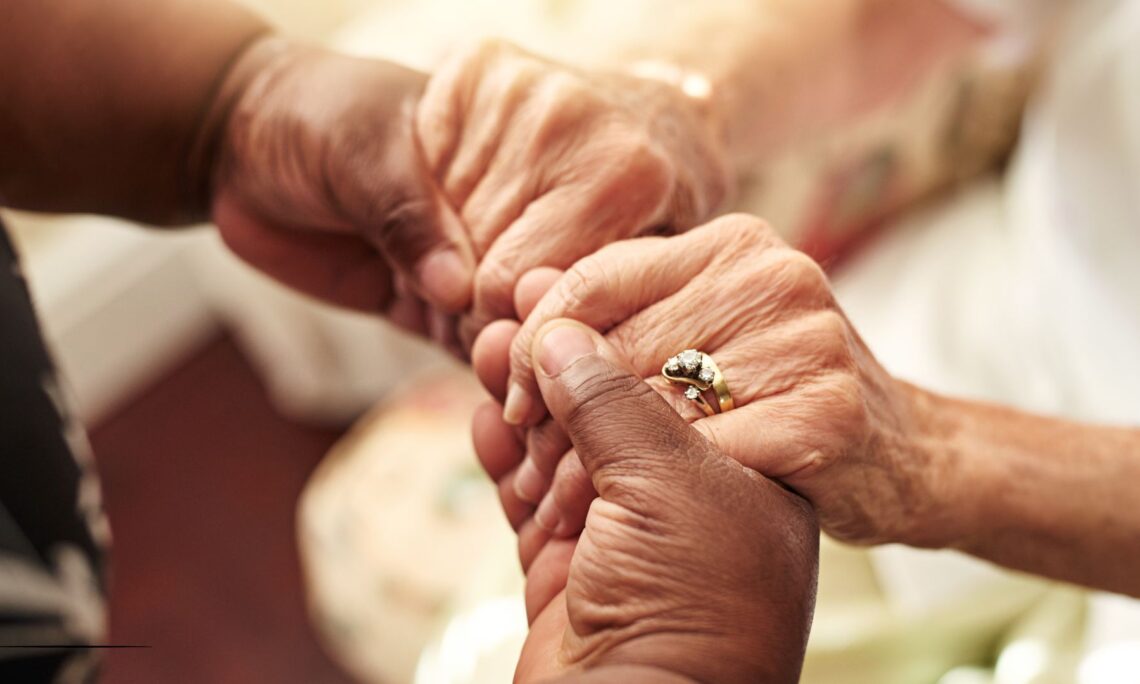
Don’t Be this Kind of Kind!
This afternoon, I took my son to the pediatrician because he needed certain vaccinations before heading off to college in August. It’s been a while since we last visited the pediatrician. I’d almost forgotten the red plastic slides, obnoxious beeping toys, and anxious parents.
Pasted on the wall of the clinic were growth charts, posters for shots and medications, and one rather odd sticker. It read: “Be kind to your kids. They’ll choose your nursing home.”
Uuum. What??!
I chuckled and commented to my 18-year-old, “I hope you remember how extremely kind I’ve been to you your whole life.”
“Yeah, sure,” came his half-grunt, half-reply. He could barely hear me over his AirPods. Or at least he pretended not to.
Sure sounds like a seedy nursing home is in my future.
Jokes aside, as I pondered that sticker, I couldn’t help but think: hopefully, the reason we’re kind to our kids isn’t so that they’ll be kind to us one day.
In fact, the reason why we’re kind to anyone isn’t mere reciprocity. It isn’t simply an exchange. It is an extension of the kindness we ourselves have received.
Scripture reminds us that “because of the Lord’s great love we are not consumed, for his compassions never fail” (Lamentations 3:22).
When we realize that we are recipients of undeserved kindness, extending compassion becomes more than a mere exchange. It becomes the overflow of understanding that we have received far more than we could ever ask or imagine.
I grew up in Chennai, India, not far from where Amy Carmichael, an Irish missionary, established a community in the early 1900s to rescue vulnerable girls exploited through temple dancing. Amy gave more than 50 years of her life to that community of compassion.
She once wrote: “Love, to be real, must cost—it must hurt—it must empty us of self.”
In that same state of Tamil Nadu, around the same period, another missionary, Dr. Ida Scudder from the US, founded a medical school for women that would eventually become Christian Medical College, Vellore. Her work transformed healthcare for women in India. Today, the institution she founded continues to serve thousands of people from across the country. In fact, about two years ago, my husband underwent surgery at that very hospital. We were recipients of Ida Scudder’s legacy of compassion—with no possible way to repay her.
And of course, the world knows Mother Teresa and her selfless work among the most neglected and broken through the Missionaries of Charity in India.
None of these women displayed compassion because they wanted something in return. None of them asked, “What’s in it for me?” None of them commodified kindness. It was never transactional.
Instead, their kindness cost them dearly. Just like their Savior.
His kindness wasn’t about being a “nice” guy.
It was unusual—He paused for a despised tax collector sitting in a tree.
It was defiant—He touched lepers even though social norms dictated that He steer clear of them.
It was radical—He defended a woman caught in adultery and offered her a new life.
It went out of its way—He traveled through Samaria so He could speak with the woman at the well.
His kindness was sacrificial—Jesus came with the mission of pouring out His life, even unto death.
God requires kindness from His children. He reminds us: “Be kind and compassionate to one another, forgiving each other, just as in Christ God forgave you” (Ephesians 4:32).
It’s not optional. It’s not a nice-to-have. It’s a hallmark of His children.
Let’s choose compassion in a world filled with contempt. Let’s choose kindness that doesn’t have strings attached.
Meanwhile, if anyone’s asking, I’ll be over here browsing through some brochures for nursing homes.
If this blog resonated with you, SUBSCRIBE to my weekly newsletter. I would love a Facebook or Instagram follow or share if you’re on social media.
MEET SUSAN

Comments
4 Comments
Arun Kumar Samuel
Strings attached – Lord help me find rest in serving others highlight if I’m holding something.
Susan Narjala
Amen. May the Lord reveal our deepest motives.
God bless.
Ted Senapatiratne
Wow, what a great thought! This has been a running joke in our family that our sons remind us of. But their homes are open to us in any possible way!
And talking of sacrificial giving by missionaries in India, and I am sure other parts of the world, and what an example they set for us to follow! Do we love in the same kind of way! Thanks, Susan for a little nudge in this direction of showing kindness to others!
Susan Narjala
Thank you, Ted, for so kindly (ahem) commenting ◡̈ Appreciate your taking the time to do that. I think we should keep sharing those missionary stories of selflessness and courage. We can’t afford to forget those. God bless.